

I practice two professions in my life. Cardiology places me downstream of an American health crisis. Real estate development, as it turns out, places me upstream of it. That combination of vantage points has led me to a conclusion most operators in the commercial real estate industry have not yet gone:
The way our communities were physically built is making people sick. And we have the tools, and importantly, the market incentive, to build for community, connection, and ultimately heart health in mind.
The Clinical Case for Better Real Estate
In May 2023, former U.S. Surgeon General Vivek Murthy issued an 82-page advisory declaring loneliness and social isolation a public health emergency. The central finding deserves to be read slowly: the mortality impact of being socially disconnected is similar to that caused by smoking up to 15 cigarettes a day, and exceeds the health risks associated with obesity and physical inactivity. The smartphone and social media have accelerated this trajectory, providing the sensation of connection while often deepening the underlying isolation.
The cardiovascular specifics are just as striking. Social isolation increases the risk of heart disease by approximately 29 percent and the risk of stroke by 32 percent. Among older adults, it raises the risk of developing dementia by 50 percent. These cardiovascular outcomes are tracked in the same peer-reviewed literature where we measure the effects of statins and beta-blockers.
The two key levers here are less walkable cities and a steady decline in what sociologist Ray Oldenburg coined “third place” gathering spaces between home and work. His argument, made all the way back in 1989, was that places like the diner, the barbershop, and the community plaza were already disappearing from the American landscape. Add the rise of e-commerce and the shift to remote and hybrid work, and the opportunities for incidental contact with colleagues and neighbors (precisely what protects against the isolation the Surgeon General has classified as a crisis) have thinned considerably.
In March 2024, the American Heart Association formalized the connection with a policy statement published in Circulation, their flagship peer-reviewed journal. The statement concludes that cardiometabolic disease, the leading cause of death in urban areas, can be markedly influenced by the spatial design of cities and their infrastructure.
The AHA is now calling for healthcare leaders, urban planners, and developers to treat heart health as a cornerstone of urban design. Unfortunately, that call has not yet reached most boardrooms in commercial real estate.
Connection is a Return Driver
Fifty-six percent of Americans, according to the National Association of Realtors, say they would prefer a smaller home in a walkable, connected community over a larger home in a car-dependent suburb. That is a majority preference the supply side of the market has chronically underserved. As it turns out the demand for connection is the largest unmet need in American real estate.
I can see what this means at the asset level because I operate across many different sectors at once. Multifamily properties designed with genuine common space, courtyards, shared amenities, ground-level activation, empirically score better on resident satisfaction surveys. But more consequentially, they outperform on retention, which is the metric that determines whether a multifamily asset compounds or bleeds. Every percentage point of occupancy that does not turn over is a significant line item, and residents stay where they feel they belong.
Office is the asset class most directly implicated by the shift to remote work, and it is also the one showing the sharpest split in performance. National office vacancy sits near a record high, but that number hides a flight to quality: the buildings with genuine amenity, communal lounges instead of another row of conference rooms, ground-floor food and beverage, staircases and atriums designed to put people in each other’s path, are leasing ahead of the market and holding rent. The buildings losing tenants are not losing them on price. They are losing them because they give an employee no reason to make the commute instead of working from a kitchen table.
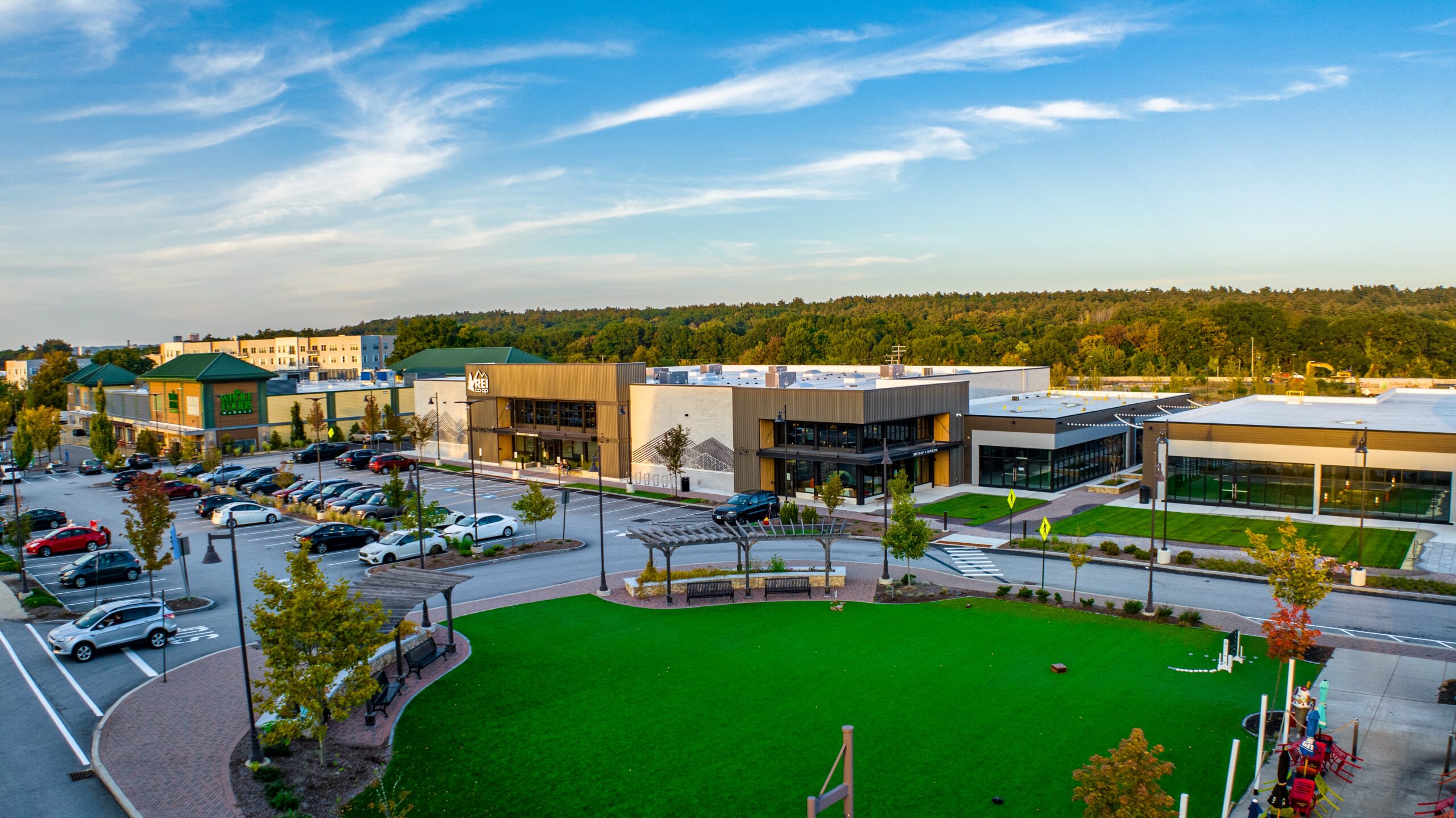
Retail is where the operator insight becomes most concrete. The centers that hold their tenancy through economic cycles are the ones curated around service and repetition. A grocery anchor brings the same household back two or three times a week. A hair salon or nail studio creates monthly appointment rhythms that return the same customers to the property on a reliable schedule. A boutique fitness studio generates daily visits from a demographic that is highly engaged and community oriented.
When you layer those cadences together you have built a weekly routine for the surrounding neighborhood. These uses also share a structural advantage: the personal service economy cannot be Amazon’d away. Physical presence drives dwell time and cross-shopping in ways that make the whole center stickier, and that stickiness shows up directly in rent roll stability and lease renewal rates.
The design choices that create human connection are good for the people who live and work in these properties. They are also, demonstrably, good for returns. Those two things are not in tension.
Building Forward
Researchers at Johns Hopkins and Harvard have given this emerging field a name: architectural epidemiology, the practice of using real estate decisions as mechanisms for intervention on chronic disease. The American Heart Association has published a policy statement on it. The European Society of Cardiology has presented research on it. The WELL Building Standard, now active in multifamily, retail, hospitality, and a dozen other asset classes, exists to operationalize exactly this connection between buildings and human health.
But for these ideas to change how communities are built, they must survive the practical disciplines of site planning, construction budgets, leasing strategies and investment committees. That is where operators can translate the research into decisions a project can support: placing shared spaces where people naturally encounter one another, designing walkable routes that feel safe and useful, curating service tenants that create recurring neighborhood routines, and measuring not only initial rents but retention, dwell time and lease renewal. Public-health recommendations become meaningful when they can be incorporated into the way projects are underwritten, built and operated.
None of this means that a courtyard can cure loneliness or that a walkable retail center can prevent heart disease. It means that the places where people spend their days are not neutral. Each development can make movement, interaction and belonging easier, or it can make them harder. Over time, those ordinary choices accumulate into patterns of daily life, and patterns of daily life become health outcomes. The built environment helped shape the conditions behind this crisis. It can also become part of the response.

