
Category :
Potential for Corporate Taxation Reform in 2013
The following post is an extension of the discussion held at the January, 15th 2013 Encore Wealth seminar. The lecture, titled “Impact of Decisions in Washington on Small to Medium Sized Businesses as it Relates to Taxation Issues in the Coming Year”, was presented by Tom Montgomery of Montgomery Coscia Greilich, LLP.
Our three previous posts, covering the American Taxpayer Relief Act of 2012 and the newest “Obamacare” taxes have sought to explain the larger picture of the American tax climate. Today, we will take this larger discussion of taxation and examine it in the context of corporate taxation, specifically the impact corporate taxation reform would have on the larger economic climate. While the possibilities of reform are endless, we will be examining two in particular – proposed cuts in corporate income taxes, and proposed tax holidays for repatriation of foreign earnings.
Corporate Income Tax RateAs of right now, corporate income tax rates are as follows:
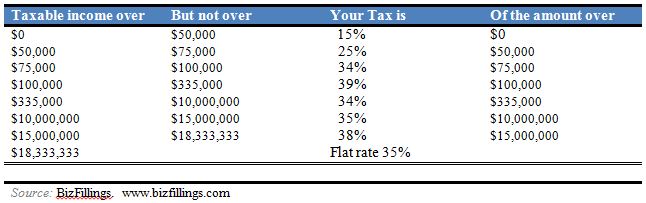
As the table above indicates, the United States currently has some of the highest corporate tax rates in the world. The double tax system the federal government currently abides by, a system that taxes income at the corporate level, distributes the income, and taxes it again despite having never generated a second layer of income, has been highly criticized as being deeply reactionary to spurring U.S. competitiveness in the global economy. Unlike most countries that offer a full subsidy (to the extent that income is taxed only once), the current American system has pushed people into corporations and at the same time given them a disincentive to distribute income from corporations by double taxing them.
With a strong bipartisan backing, both parties have proposed cuts from the current corporate tax rate of 35 or 34 percent down to 24, 25, or 28 percent. If implemented, this tax reduction will not only incentivize American companies to stay in the U.S., but would inevitably prompt foreign entities to conduct more business in the United States.
Repatriation Tax Holiday In addition to the above reduction in corporate income taxes, proponents of corporate tax reform have pushed for the creation of repatriation tax holidays. Such holidays would drastically cut the taxation rate, often for a short period of time (generally one year), and subsequently prompt businesses who have amassed profits outside the U.S. to bring the money back into the country. With the top 90 corporations holding 1.8 trillion dollars of cash overseas, a repatriation tax holiday would encourage said companies to bring the money back and potentially reinvest it back into the U.S. economy. As was the case with the repatriation tax holiday passed in 2004, the tax holiday would reduce the tax rate around 85 percent of the normal rate of 35 percent. Learning from the mistakes America made nine years prior, an effective repatriation tax holiday must not only provide a lower tax rate, but ensure that the funds transferred are used in a fiscally responsible manner that promotes direct reinvested into the U.S. economy.
Change is Here: The American Taxpayer Relief Act of 2012 and New Obamacare Taxes in Review – Part II
Earlier this week we reviewed vital portions of the American Taxpayer Relief Act of 2012. As a continuation to the prior post, this week we will review the new taxes that took effect January 1st 2013 under the Patient Protection and Affordable Care Act, otherwise known as Obamacare. To view the first installment.
Surtax on Investment Income
High income earners, meaning those earning over $200,000 filing as single or $200,000 for married couples filing jointly, can now be expected to see a 3.8% Medicare surtax on their investment incomes. This new law applies to all forms of investment income, including interest, capital gains, and dividends so long as they are above the $200,000 threshold. This tax is expected to bring $123 billion in revenue.
Higher Medicare Payroll Taxes
Individuals earning over the $200,000 threshold and filing as single or $250,000 and filing as married will see a raise in their Medicare payroll tax of 0.9%. This is an increase from the prior years’ 1.45%. This is expected to raise $86.6 billion.
Medical Device Tax
Affecting a relatively small group of the population, the medical device tax will impact approximately 360,000 people who are currently employed in the medical manufacturing industry. The new law places a 2.3% excise tax on medical devices that retail over $100. This new tax has come under great scrutiny, as it is imposed on the sale of items as opposed to the profit garnered from the sale of these items. As a result, many medical device manufacturing companies will be forced to raise prices – decreasing the facility to engage in technical innovation. The medical device tax is excepted to raise $20 billion in revenue.
Limits on Itemized Medical Expense Deductions
Generating $15.2 billion in revenue, the Patient Protection and Affordable Care Act modifies the previous limits on itemized medical expense deductions from the original 7.5% to a new high of 10% of adjusted gross income. While this 10% will be the going rate for all Americans regardless of what tax bracket they may find themselves in, seniors 65+ will be eligible to use the old 7.5% rate for the next three years.
Flexible Spending Account Limits
Starting January 1st 2013 flexible spending accounts (FSA) and similar pre-tax accounts will no longer be welcoming unlimited contributions, rather they will henceforth be capped at $2,500 annually. Much controversy has surrounded this new law, as many families with special needs children use said FSAs to pay for tuition and special needs childcare related expenses. Despite such unabashed criticisms, the law is expected to garner $13 billion in revenue and will only affect a small minority of FSA users, as many employers have already independently chosen to cap FSA allowances prior to the passage of the law.
Zisler Capital Associates Join Encore Enterprises
(Dallas, Texas) January 24, 2013 – Encore Enterprises, Inc., a Dallas-based real estate investment, development and management firm, is pleased to announce that Dr. Randall Zisler and Matthew Zisler, the principals of Zisler Capital Associates, LLC, have joined Encore as Senior Managing Director and Managing Director, respectively. They will direct the firm’s global institutional capital placement activities from the firm’s Denver office.
Prior to joining Encore, Randy and Matthew were co-founders and managing principals of Zisler Capital Associates, an institutional capital raising and financial strategy consulting firm with deep expertise in private and public real estate debt and equity.
In their new roles, Randy and Matthew will work with Encore’s senior principals to raise joint venture equity, separate accounts, and structured finance to grow the firm’s portfolio of hospitality, office, multifamily, and retail properties. Patrick Barber, President and CEO of Encore Enterprises, Inc., said, “The Zisler team will deepen and expand our institutional capital reach, fuel our considerable pipeline of off-market opportunistic and value added opportunities, and help accelerate Encore’s momentum.”
Randy has held senior positions at Goldman Sachs & Co., Jones Lang LaSalle, Nomura Securities International, and Pension Consulting Alliance. He is known as a thought leader in real estate finance, capital markets, and portfolio strategy. He began his real estate career as an assistant professor at Princeton University, where he taught economics, planning, and finance. At Princeton he earned his undergraduate degree, two of his three master degrees and his Ph.D.
Matthew was a vice president in the structured finance group at Buchanan Street Partners where his responsibilities included the origination, underwriting, and marketing of commercial real estate debt and equity in the western U.S. He was an associate in the private equity acquisitions group at Heitman in Chicago and a financial analyst in equity derivatives at Goldman Sachs & Co. Matthew graduated from Boston College where he majored in economics.
About Encore Enterprises, Inc.
Encore Enterprises, Inc. is a privately owned national real estate company founded in 1999 with offices in Dallas, Texas, Denver, Colorado, Hong Kong, and Gulfport, Mississippi. Encore develops, acquires, and manages hotels, multifamily communities, retail shopping centers, commercial offices, and public-private mixed use developments. For more information about Encore Institutional Capital, LLC, visit encorebz.wp.brainvire.dev, or call (214) 259-7000.
Change is Here: The American Taxpayer Relief Act of 2012 and New Obamacare Taxes in Review – Part I
Narrowly missing their midnight deadline, the Congress averted the impending “fiscal cliff” through passage of the American Taxpayer Relief Act of 2012 with a vote of 89-8 in the Senate, and 257-167 in the House. The president then signed the bill into law on January 2, 2013. Now that the fiscal cliff crisis has been averted, it is essential to review the changes that are to come with the passage of the American Taxpayer Relief Act, as well as the new provisions of the Patient Protection and Affordable Care Act, henceforth referred to as Obamacare, that will take effect January 1st 2013.
American Taxpayer Relief Act of 2012
Marginal Rates
Effective January 1st 2013, the American Taxpayer Relief Act modifies the Bush era tax cuts by implementing sunsets for individuals with incomes above $400,000 for single individuals and $450,000 for families. Individuals earning above the $400,000 mark will see a tax increase of 4.6%, from the previous 35%. For all other individuals in lower tax brackets, marginal rates will stay the same as they were during the Bush era tax cuts.
Capital Gains and Dividends
For capital gains and dividends, the same threshold as described above will be used. The rate for individuals earning over $400,000 will increase to 20% – a 5% increase from the year prior. All other tax brackets will remain at 15%. Joint filers earning below $72,500 and single filers earning less than $36,250 will be taxed at 0%.
Estate Taxes
Both estate and gift taxes have raised to 40% with the exemption being set at $5 million adjusted for inflation. This is a 5% increase from prior years.
Alternative Minimum Tax
Changes to the Alternative Minimum Tax (AMT) include increases to exemption amounts, an allowance of nonrefundable personal credits to the full amount of the person’s regular tax and AMT, and a yearly adjustment for inflation.
Personal Exemption Phase-Outs and Pease
Personal Exemption Phase-Outs, which were suspended under the Bush tax cuts, have been revived albeit at higher levels than in the past. Pease has also been reinstated also with a higher applicable threshold. All dollar amount thresholds required for both PEP and Pease will now be adjusted for tax years following 2013.
Education
One of the Obama Administration’s centerpieces, the American Opportunity Tax Credit (AOTC) has been extended to 2017. The credit provides up to a $2,500 tuition reimbursement for qualifying students. The credit was also modified so that students would be eligible for the credit for a total of four years, as opposed to the prior instated two year maximum. Mutually exclusive with the AOTC, the act extends above-the-line deductions for qualified tuition and related educational expenses.
Mortgage Debt Relief
To give homeowners struggling to make payments relief, the Mortgage Debt Relief Act of 2007 was extended so that homeowners may exclude canceled debt from being taxed on their principal residence up to $2 million.
Business Extenders
A variety of business extenders were included in the Taxpayer Relief Act including extension of the Work Opportunity Tax Credit (WOTC). The WOTC provides a credit for businesses that employ individuals who may be considered targeted groups as per the Federal Government. Such businesses will be provided a credit of up to 40% of the individual’s yearly wages for a maximum of $6,000. To the surprise of many, the research tax credit was also extended with bi-partisan support. Criticized for its annual $1.43 billion cost, the act rewards businesses that choose to invest in qualified research opportunities.
Part two of this segment, which is to be released in the following days, will include a review of the new Obamcare taxes that are to be implemented starting January 1st 2013. You will be able to access the new post here.
Encore Multi-Family Begins Construction on $32 Million Apartment Community in the Southwestern Medical District
(Dallas, Texas) January 03, 2013 – Encore 6162, groundbreaking occurred in December 2012, and first units are scheduled for delivery in February 2014, with final project completion slated for June 2014. Encore Multi-Family is a subsidiary of Encore Enterprises, Inc., a full-service commercial real estate acquisition, development and management company focused on the hospitality, retail, office, and multi-family sectors.
Encore 6162 will be a departure from typical Dallas apartment product due to modern architectural elements found in higher-end condominium developments. These will include a porte-cochère and a unique blend of exterior materials which will include metal, wood, stone and brick components. In addition to high-end interior finishes; the development will feature a multi-level, resort-style swimming pool, an extraordinary fitness facility, and impressive community gathering areas. Encore 6162 will be competitively priced for the area with rents projected to range between $900 and $1,500 per month.
Brad Miller, President of Encore Multi-Family, praised the City of Dallas for their cooperation in the rezoning initiative and further stated, “It is a once-in-a-lifetime occurrence to develop apartments within two miles of $2.5 billion in current medical construction projects; the expansion of Parkland Hospital and UT Southwestern is expected to generate 15,000 new jobs over the next two years. That fact combined with the $500 million Love Field expansion has changed the dynamics of the former industrial neighborhood.”
Encore 6162 is the ninth construction start for Encore Multi-Family during the past three years.
Construction financing is being provided by Whitney Bank, New Orleans.
About Encore Multi-Family, LLC
Encore Multi-Family, LLC is a subsidiary of Encore Enterprises, Inc., and was founded in 2008 as a fully integrated multi-family developer, owner and operator. The company is involved in all aspects of multi-family development projects and acquisitions including ground-up developments, joint ventures and mixed-use turnkey developments. For more information about Encore Multi-Family, LLC, visit encore.bz or call (214) 259-7000.
Understanding Consumer Confidence: U.S. Economy & Commercial Real Estate Markets
This post is the second installment of the U.S. Economy and Commercial Real Estate Markets series presented by Mark Cypert at the Encore Wealth Breakfast on 12.12.12.
Last week I reviewed the fiscal cliff and discussed what the U.S. economy would look in the coming year like given a variety of possible scenarios. Today I will look at consumer confidence, the second part of the equation when determining economic outlook. My third and final installment, on understanding unemployment, will follow.
Loosely defined, consumer confidence represents how buyers feel about the current and future state of the economy. Because consumer confidence impacts consumer expenditures, which account for approximately 70% of total U.S. economic output as measured by GDP, a high amount of consumer confidence represents a positive relationship with economic growth. While growth may be occurring at a promising and steady rate, the large drop in consumer confidence that occurred during the recession makes the climb back up to “normal” levels a slow and steady one. Though consumer sentiment has trended upward since 2009, it remains below pre-recession levels due to a combination of high unemployment rate, a housing bust, the financial crisis, and continued fiscal uncertainty.
Unemployment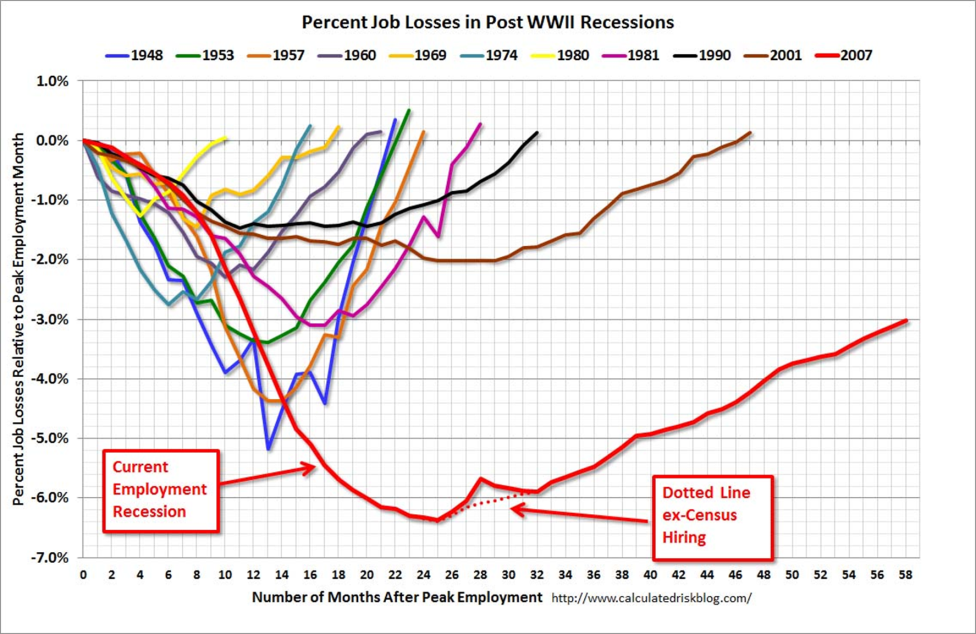 According to the U.S. Bureau of Labor Statistics, October 2012 saw 5 million workers be unemployed for 26 weeks or more. Though this is generally trending downwards, the number of unemployed people remains very high. As an integral component to consumer confidence, unemployment rates must be reduced in a drastic manner to boost confidence. (This discussion on unemployment is by no means exhaustive, and will be analyzed in greater detail in the following blog post.)
Housing Market 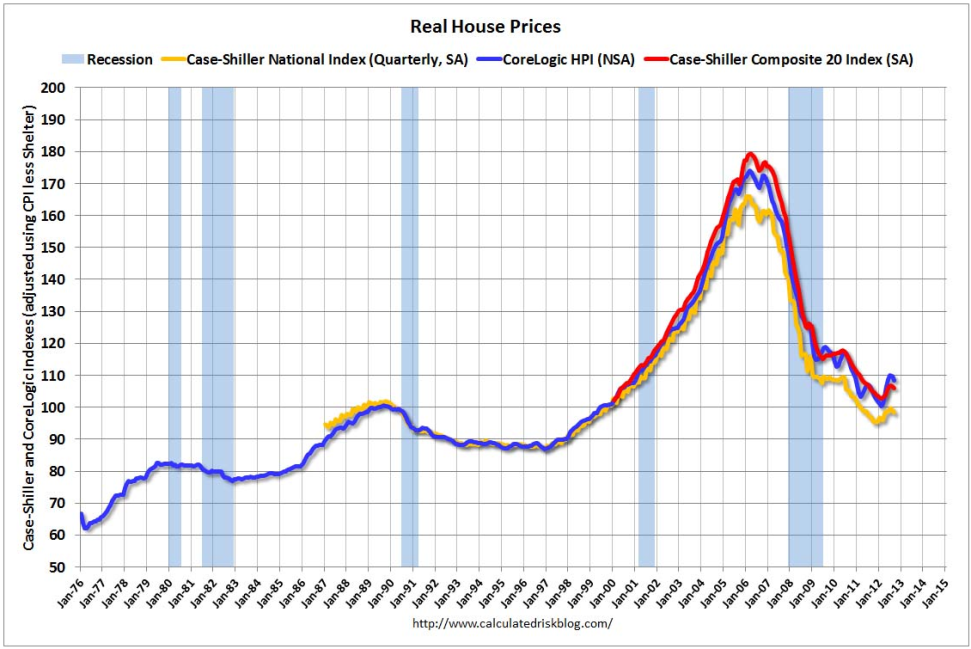 U.S. home prices, another substantial piece of the consumer confidence puzzle, tell a similar story. Currently, U.S. home prices are 30.9% below their peak 2007 values and, adjusting for inflation, home values have reverted back to the levels of 1999-2001. While this too may seem as a relatively bleak depiction of the housing market, it is important to remember that these indicators are trending in a positive direction in light of the damage done by the great recession.
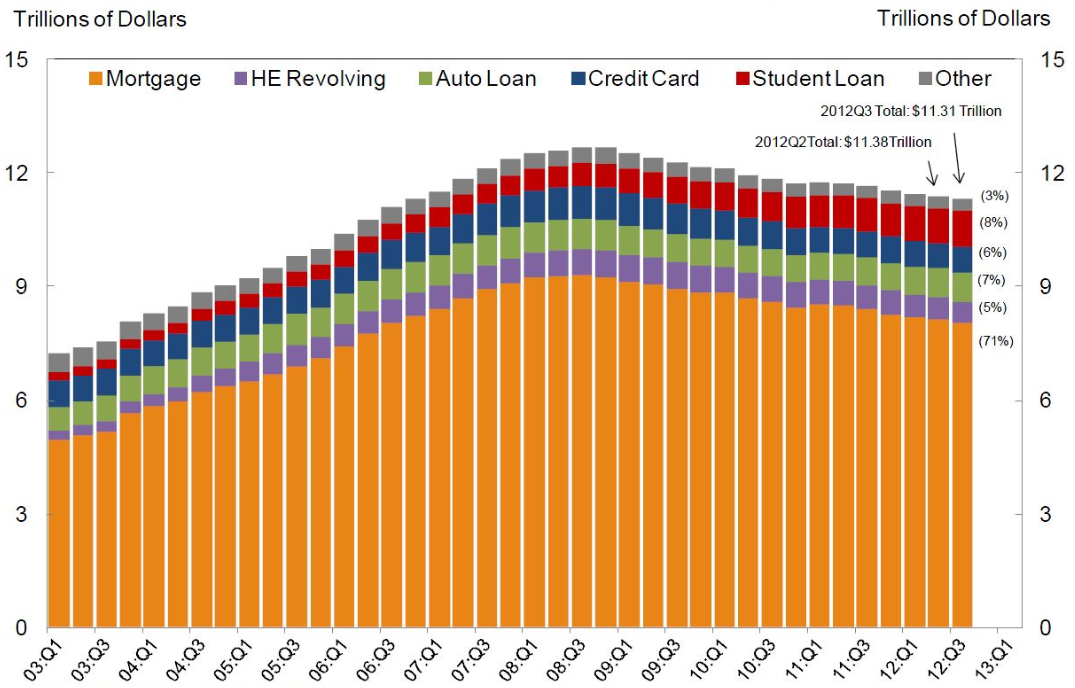
Image from calculatedriskblog.com
Consumer Debt Consumer debt has continued to trend downward since mid-2008 but student loan debt has continued to increase. Despite the growing student debt, the overall consumer debt is trending downwards. This downward trend represents a positive indicator for overall consumer confidence.
Monetary Policy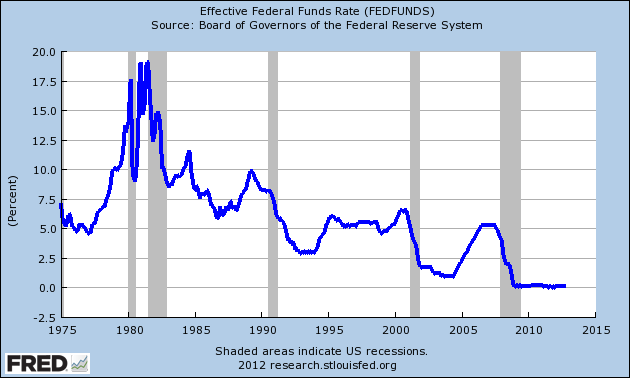 The U.S. Federal Reserve monetary policy has also had a significant impact upon total economic output. While the Federal Reserve does hold the tools to manipulate the U.S. economy the fastest and in the most direct manner, their ultimate goal remains to provide economic stimulus but not so much that high inflation becomes a problem. Due to the monetary policy, inflation is currently running near its 2% target growth. The Federal Reserve both has indicated that they intend to keep the target range for the federal funds rate, the interest rate at which banks lend their excess balances to other banks overnight, at 0 to 0.25% through at least mid-2015. It is important to note that this has been set to historically low rate to spur economic growth, and will likely never remain at such a level. While commercial banks do continue to deal with problem loans, the overall commercial lending to fuel business growth continues to trend upward.
Conclusion
Given the above mentioned economic indicators, it is abundantly clear that consumer expenditures, subdued inflation, historically low interest rates and a recovering lending environment have all contributed to the growth of consumer confidence as well as a 2% growth (adjusted for inflation) of the U.S. economy as a whole. If the Fed is keeping rates historically low to stimulate continued economic growth and the supply of capital to find business expansion continues to increase, businesses will continue to witness a drastic increase in corporate profits. Though corporate profits started to rebound midway through the previous recession due to expense cutting, revenue growth has allowed for a rapid increase in corporate profits to record high levels. Over time, profitable business owners tend to expand their workforce if they are confident that prospects for revenue growth can be sustained.
Mark Cypert serves as president of Encore Office. He is a senior lecturer for the CCIM Institute with his specialty being in commercial real estate market analysis. For his full biography.
Understanding the Fiscal Cliff: U.S. Economy & Commercial Real Estate Markets
The following is the first of a multi-part lecture series on the U.S. Economy and Commerical Real estate presented by Mark Cypert at the Encore Wealth Breakfast on 12.12.12.
The success of commercial real estate markets is contingent on the success of the larger, general economy. Subsequently, uncertainty with U.S. fiscal policy has negatively impacted business expansion and commercial real estate demand. In this segment, which was presented at the Encore Wealth series on December 12th 2012, I use current economic indicators to determine the future outlook for commercial real estate markets.
To understand why it is that uncertainty within fiscal policy so negatively affects commercial real estate markets, it is important to first understand the commercial real estate demand cycle.

Like links in a chain, when a portion of the commercial real estate demand cycle is negatively affected, the remainder of the cycle is hurt. As we can see, consumer and business confidence are the most impacted by wavering fiscal policy.
To understand what it is that prompts this low level of confidence it is important to first understand the issues currently associated with fiscal policy. With the current U.S. debt burden being so high, having increased to 104.8% from 63.8% as of 2007, the Budget Control Act of 2011 was instituted to minimize high federal debt and all its subsequent ramifications. The act, known as the “fiscal cliff” mandated a combination of automatic tax increases and budget cuts totaling more than $1.2 trillion beginning January, 1st 2013.
While there is bipartisan agreement that a fiscal cliff must be avoided, a bipartisan consensus on the method with which to do so remains highly disputed. Front and center of this political stalemate is the issue of tax increases, which constitute the largest component of the fiscal cliff, totaling approximately $500 billion. If an agreement is not met by December 31st 2012, the Bush tax cuts will expire and all individual marginal tax rates will increase. The lowest bracket is expected to rise from 10% to 15% and the highest from 35% to 39.6%.
In addition to tax increases, the national economy would also see a substantial amount of deficit reduction via sequestration, which refers to the automatic spending reductions totaling $110 billion per year for the next decade. The cuts would be split equally between defense and non-defense programs, though entitlements such as Medicare, Medicaid, and Social Security would generally be spared.
The final, and arguably most critical, component of the fiscal cliff is the debt ceiling limit. Without raising the current debt ceiling, the country faces a potential default that would lead to a significant downgrade of its credit rating and would reverberate across the global capital markets. While Republicans and Democrats have historically been divided on the tax cut versus spending cut debate, the general consensus on Capitol Hill is that if agreement is to be reached, the debt ceiling will be the driving force behind it.
Given the three variables that go into creating the issue of the fiscal cliff, the question of what a post December 31st economy would look like, remains. Currently, the most likely scenario to occur is that Congress will reach an interim compromise agreement that will include an increase in the debt ceiling. The increase would provide time for the parties to negotiate a more comprehensive and long-term fix for 2013. Additionally, a one year extension of the Bush tax cuts limited to income below $200,000 for single filers and $250,000 for married filers is likely to be passed. While it is clear that the accord is a stopgap measure for a much larger and convoluted financial problem, it will nonetheless have some very large and immediate consequences. Those within the highest income brackets will feel an almost immediate tax increase. On the other hand, individuals benefitting from entitlement programs such as Social Security and Medicare will see reduced benefits including a rising of the benefit age, and a reduction in cost-of-living adjustments.
Going back to the question of what this means for commercial real estate markets, it is clear that changes in fiscal policy will subsequently result in changes in the CRE market. Of a few things, we are certain. For one, we are currently witnessing the lowest tax rates of the foreseeable future. Regardless of the outcome of current negotiations, higher taxes are on their way. Real estate investments will continue to be an effective income tax shelter via mortgage interest deductions, cost recovery (depreciation) etc. In sum, businesses and investors will have to endure at least another six months of fiscal uncertainty.
This concludes the first installment of the U.S. Economy & Commercial Real Estate Markets series. Having covered fiscal policy, the segment to follow will discuss the impact of fiscal uncertainty upon consumers.
Mark Cypert serves as president of Encore Office. He is a senior lecturer for the CCIM Institute with his specialty being in commercial real estate market analysis. For his full biography.
AMERICA’S NEWEST IHOP NOW OPENS IN D’IBERVILLE, MISSISSIPPI
In Addition to Bringing “Everything You Love About Breakfast”, New Restaurant Brings 85 New Jobs to the Community.
D’Iberville, MS –(November 8, 2012) – International House of Pancakes, ranked No. 1 in family dining for the past five years by Nation’s Restaurant News is now serving “everything you love about breakfast” at its newest location, in D’Iberville, Mississippi. The new restaurant will celebrate with a grand opening on November 9, 2012 and is located at 11475 Cinema Way Drive in the Lakeview Village shopping center.
The new IHOP is open 24 hours a day and features breakfast favorites such as the famous varieties of pancakes and omelets, as well as a wide selection of popular lunch and dinner items. In addition, IHOP continues to add to its “SIMPLE & FIT” menu items of 600 calories or less. IHOP was also the first to feature a “Just for Kids” menu items that are also “SIMPLE and FIT”
”IHOP is proud to be joining Lakeview Village and the D’Iberville community and to extending the unique brand of IHOP hospitality to a new group of customers,” explains John Smolenyak, Southwest region director of IHOP. “In addition to offering our delicious food, we know that Encore Enterprises will do everything they can to help this new IHOP be a positive and involved member of the community.
Dr. Bharat Sangani, chairman of Encore Enterprises and developer of Lakeview Village shopping center echoes those statements, “While we are proud to add another international brand to Lakeview, it’s very much a local business. The new IHOP restaurant will have approximately 85 staff members, with many living in the D’Iberville area. It’s nice that in addition to serving great food, we are making a positive impact on the local economy that so many of us call home.”
About IHOP – For 54 years, IHOP has been the leader and expert in all things breakfast and the #1 leader in family dining. The chain is without competition in its menu offering, serving 65 different signature, made-from-scratch breakfast options as well as a range of healthy, under-600 calorie meals. Beyond offering “everything you love about breakfast,” IHOP also has a wide selection of popular lunch and dinner item as well. IHOP offers its guests an affordable, everyday dining experience with warm and friendly service. As of Sept.30, 2012, there were 1,565 IHOPs in 50 states and the District of Columbia, as well as in Canada, Guatemala, Mexico, Puerto Rico, the United Arab Emirates, and the U.S. Virgin Islands. Under the licensed name IHOP at HOME® consumers can also enjoy a line of premium breakfast products available at leading retailers. IHOP restaurants are franchised and operated by Glendale, Calif.-based International House of Pancakes, LLC and its affiliates. International House of Pancakes, LLC is a wholly-owned subsidiary of DineEquity, Inc. (NYSE: DIN). For more information, please visit us at www.ihop.com.
About Encore Enterprises, Inc. – Encore Enterprises, Inc., is a diversified commercial real estate firm in Dallas, Texas, that is active in the hospitality, retail, multifamily and commercial office space sectors. Since the company’s formation in 1999, Encore Enterprises has completed over $1.23 billion in real estate transactions with a focus on the Southern, Eastern and Midwestern United States. For more information about Encore Enterprises, Inc., visit encorebz.wp.brainvire.dev.
Rick Chess Named President of Encore Equities, LLC
Dallas, TX (September 14, 2012) – Rick Chess has been named president of Encore Equities, a subsidiary of Dallas-based Encore Enterprises, Inc. With 28 years of securities and commercial real estate experience, Mr. Chess has closed $2 billion in real estate transactions during his career, and raised $270 million in equity for United Dominion Realty, ManEquity, Triple Net and ARCM. As president of Encore Equities, Mr. Chess will manage the placement of equity for all of Encore’s real estate investments and Funds.
Prior to Encore, Mr. Chess was president of American Realty Capital Markets where he oversaw all operations of the managing broker-dealer. Mr. Chess was previously director of 1031 transactions for Triple Net Properties where he raised over $100 million of equity for Reg. D offerings and non-traded REITs. He has also served as real estate manager for Winstar Wireless where Mr. Chess oversaw the negotiation and installation of wireless communications technology inside urban areas, and was an associate with CB/Richard Ellis. Mr. Chess has held positions with United Dominion Realty, ManEquity (Manufacturers Life Insurance), Anderson & Strudwick, the Richmond Chamber of Commerce, the Pennsylvania General Assembly and the Allegheny County Law Department.
Mr. Chess attended the University of Richmond Law School where he received a Juris Doctorate of Law, and he attended the University of Pittsburgh where he earned his Bachelor of Science in Psychology and Economics. Mr. Chess holds the following FINRA securities licenses: 7; 63; and 39.
About Encore Equities, LLC: Encore Equities is a subsidiary of Encore Enterprises, Inc., created with the mission to preserve investor capital while providing attractive risk-adjusted returns. Encore has brought together an inter-disciplinary team that has expertise with multiple capital channels, such as: high net worth individuals, institutional investors, broker-dealers and niche capital channels (e.g., EB-5). For more information about Encore Equities, LLC, visit encorebz.wp.brainvire.dev, or call (214) 259-7000.
Load More