Category :

Navigating Real Estate When Proformas Meet Reality

In 2024, approximately $929 billion in commercial real estate debt came due in the most challenging financing environment in a decade. Interest costs climbed, insurance premiums surged, and exit strategies shifted dramatically. Sponsors who could pivot swiftly preserved value and those who couldn’t struggled.

Markets can turn quickly, and when they do, proformas are usually the first casualty. Predicting future performance with spreadsheets is standard in commercial real estate and an essential part of analyzing prospective deals. Informed by intense market research, it also provides critical guardrails for asset management post close. However, when extenuating circumstances hit and market dynamics no longer match the model’s underlying assumptions sponsors need to be savvy enough to know what levers to pull next. For high-net-worth investors and wealth management professionals, recognizing a sponsor’s skill in navigating market volatility is more crucial than ever.

“For over 10 years, it was typical to assume a 4% to 6% annual increase in insurance costs. Those stable and predictable assumptions went out the window post-COVID,” explained Charlie Keels, President of Encore Multifamily. He explains, “Underwriting isn’t static. Successful multifamily investment requires constant recalibration. It’s not about being exactly right from the start; it’s about being highly adaptable and experienced enough to know when to be patient and when to get creative.”

Keels faced precisely this situation with their Encore Montrose project, a multifamily development in Houston’s urban core constructed before COVID-19 reshaped tenant preferences and market demand. Originally positioned for young professionals desiring urban live-work-play environments, Encore Montrose faced slower rent growth than anticipated due to work-from-anywhere permission shifting demand toward suburban areas.

With Encore’s strong balance sheet, the project was able to hold steady until Keels eyed an opportunity with an affordable housing tax structure. The underwriting penciled out and the decision reduced property tax liabilities, which increased net operating income significantly. Keels emphasized, “It’s about persistence, flexibility, and knowing when and how to pivot to drive investor value.”

Some of the most difficult levers in real estate are found in the fixed costs, particularly insurance and property taxes. In one Dallas–Fort Worth multifamily project, Keels and his team focused on insurance, a line item often seen as immovable, and cut costs by nearly 50 percent. By aggregating coverage across multiple assets and leveraging a blanket policy through a partner like Greystar, the team spread risk and secured better pricing without compromising protection. It’s a clear reminder that returns aren’t solely driven by revenue and that great execution lives in the line items.

This underscores a critical truth about underwriting. It’s far more strategic than transactional and sometimes less is more. Seasoned professionals like Drew Rohmer, senior underwriter at Encore Enterprises, know that the goal isn’t to model every detail but instead to zero in on what truly has the power to move the needle. As he puts it, “When a model tries to answer every question, it usually means the underwriter hasn’t figured out the right question yet.” In fact, overly complex models can be a red flag, often signaling that a sponsor lacks confidence in their instincts and is trying to back into a result with false precision.

Instead, experienced underwriters focus on thresholds: the minimum rent required to clear debt service, the cap rate sensitivity that breaks the return, the construction cost ceiling before a deal stops penciling, etc. Experienced professionals streamline their models not because they know less, but because they know exactly what matters and what doesn’t.

All of this takes time and a fair amount of mental gymnastics which many have been supplementing with artificial intelligence. Rohmer warns that while AI may be useful for speeding up surface-level research, at its core, it’s still a language learning model and not a numbers engine. That distinction is critical in underwriting, where precision matters. Rohmer found that AI can have an inherent bias to tell you what sounds right rather than what is right. In a discipline where even minor miscalculations can derail a deal or an overly rosy market analysis can mislead investors, that kind of false confidence isn’t just risky, it’s dangerous.

Yet, despite AI’s growing influence, underwriting remains intensely human. Rohmer explains, “AI can save time in researching markets and gathering comparables, but it can’t replace market intuition and relationships. Real estate isn’t just numbers; it’s experience, instincts, and decisive action.”

Encore’s strategic response at Encore Montrose further highlights this. Under normal market conditions, Encore reassesses its underwriting two to three times annually to ensure alignment with evolving fundamentals. However, for assets facing distress or material deviations from plan, Encore increases its frequency, sometimes revisiting core assumptions monthly.

As Keels notes, “You can’t overreact, but you can’t ignore realities either. If you change the plan too often, you’ll only make things worse. It takes experience to gauge timing and know when to recalibrate.” For Encore Montrose, it took two years to enact the tax advantage strategy. He adds, “That judgement—plus a strong balance sheet and the ability to effectively leverage financing structures and control costs—is what separates a good outcome from a great one.”

In real estate investing, the market rarely moves as projected. That’s not a flaw; it’s reality. For wealth managers and investors, it means weighing a sponsor’s track record of adaptability under stress as critically as initial IRR projections in decision making. Anyone can make a deal pencil, but that doesn’t make it durable. Trust is built on how an investment performs in the real world, and that has everything to do with the decision makers behind it.

Growing Pains: America and the Burden of Exceptionalism

Dr. Bharat SanganiAs a businessman and immigrant who chose America as my home and professional foundation, my relationship with American exceptionalism runs especially deep. It is more than a theory to me, it is the foundation upon which I’ve built my career, my family’s future, and the businesses that support our communities. America offered me opportunities unparalleled elsewhere, and that belief continues to fuel my optimism for our nation’s enduring role as a global leader, even as today’s geopolitical realities force us to confront uncomfortable questions about that future.

American exceptionalism is often discussed in the language of economics and geopolitics. But I’ve found a more intuitive way to understand it: the relationship between a parent and a child. One that must mature to remain healthy.

For much of the modern era, the United States has been viewed by the world as the ultimate safe haven—a reliable, stabilizing force in times of uncertainty. Global markets instinctively turned to America for security: investing in Treasury bonds, purchasing American defense equipment, and reinforcing the strength of the dollar. This trust allowed the U.S. to print money with relative freedom, manage its debt without penalty, and sustain prosperity without compromising its global standing.

The Waning Illusion of American Invincibility

Just as children gradually come to understand that their parents are not infallible, the world is beginning to recognize the limitations of American dominance. Ideally, this awareness would emerge gradually, allowing time for adjustment and recalibration. In recent months, however, that shift has felt abrupt, exposing the U.S. to a level of scrutiny it has long avoided. Once that sense of unquestioned credibility is disrupted, it becomes difficult to restore.

Economist Ruchir Sharma and author of The Rise and Fall of Nations and What Went Wrong with Capitalism recently argued that the “overdue rebalancing of global markets has just begun, and is likely to be playing out for a long time.”

Recent developments make this shift unmistakable. America’s national debt is projected to surpass $40 trillion, driven in part by sweeping fiscal policies informally known as “The One, Big, Beautiful Bill.” Credit rating agencies have responded with downgrades. Meanwhile, the dollar’s once-unquestioned role as the world’s reserve currency is eroding. And unsurprisingly, the price of gold is soaring, with intensified interest coming from central banks and individual investors alike. Today’s rising interest rates now reflect global markets’ growing concern over U.S. debt sustainability.

We also see this redefinition taking shape in various corners of policy and trade. President Trump’s erratic approach to tariffs, which Financial Times columnist Robert Armstrong coined the TACO doctrine (Trump Always Chickens Out), captures a growing unpredictability in American policy. And it is likely to embolden other nations to pursue their own trade agreements without Washington’s involvement. The recent “Anywhere But USA” (ABUSA) trading strategies adopted by hedge funds and intrepid investors have brought this trend into sharper focus: the gravitational pull of the U.S. is weakening.

Flying the Nest

However, these are not signs of imminent collapse, as many sensationalist headlines might suggest. But they do mark a turning point. The world is beginning to treat America not as the exception, but as a peer in a more balanced global order. This evolving equilibrium empowers other nations to chart their own economic and diplomatic courses without defaulting to U.S. leadership and stewardship. The transition from exceptionalism to economic normalcy may be subtle, but it is significant.

Take NATO, for example, which has historically relied on U.S. defense spending. As American commitments have become less consistent, many allies have responded by strengthening their own capabilities. Germany, for instance, has made significant increases to its defense budget, fostering greater economic and strategic autonomy within Europe. This shift is not a rejection of the alliance, but a natural progression. The “children” are growing more independent, and the “parent” is no longer required in the same role.

Some interpret this as a signal of American decline. They point to rising debt, downgraded credit, and the softening dollar. These concerns are valid, but they don’t tell the full story. Yes, the markets are demanding higher yields. Yes, faith is being tested. But beneath the surface, America’s economic infrastructure remains strong, its innovative capacity unmatched. The U.S. continues to serve as a cornerstone of global stability—still essential, even if no longer infallible.

If Not America, Then Who?

If America were to meaningfully step back, who would take its place?

Within Europe, Germany is an economic powerhouse but struggles with domestic political fragmentation. Russia, isolated by global sanctions and deep mistrust, lacks the credibility to lead. China has grown rapidly and can handle money better than most, but as a communist government it faces transparency and trust concerns. Japan maintains influence but is still hampered by long-term deflationary cycles and an aging demographic. Australia and New Zealand are respected but lack scale and global centrality.

India emerges as the most promising contender. Its democratic structure, economic dynamism, and demographic advantage make it a rising force, and it is soon to become the world’s third-largest economy. But India’s democratic institutions are a mere 75 years young, its infrastructure still evolving, and its political continuity remains uncertain. Its path to global leadership is promising, but not yet fully formed.

So, for all the shifts underway, America remains uniquely positioned. Temporary disruptions don’t dismantle foundational strength. Innovation, democratic stability, and a deeply rooted entrepreneurial culture continue to define the U.S. economy. The current challenges are real, but they resemble family tensions: uncomfortable, yet navigable.

In the Meantime

The world still seeks steady leadership, and no alternative has yet emerged with the credibility, capacity, and cohesion to take America’s place. Despite moments of retreat and recalibration, the U.S. remains indispensable. Just as a family thrives under wise, steady guidance, global economies still look to America, even if the relationship is maturing.

Could another nation eventually lead? Perhaps. But if the U.S. were to step back dramatically, the global transition to a new leader would take decades, and much can happen in the interim.

As for me, I remain focused on where I know my dollars will work hardest: building American homes, shopping centers, gas stations, and hotels; running medical clinics, dental offices, and coffee shops; and funding the small businesses that form the backbone of Main Street. My confidence in America is not blind, it is earned. And while the illusion of American invincibility may be gone, its exceptionalism remains.

At least for now.

Encore Enterprises Doubles-Down on Dallas: Acquires Class B Commercial Medical Office Building, Reopens Corporate HQ as Owner-Occupied Tenant

DALLAS – (June 9, 2025) – Encore Enterprises, Inc. (Encore) today announced the acquisition of a two-story, Class B medical office building at $114 PSF with 61,356 rentable square feet, located at 16980 N. Dallas Parkway. Situated on 3.144 acres fronting the N. Dallas Tollway north of Westgrove, adjacent to the Quorum/Bent Tree submarket, Encore financed the $7 million property through a bank loan from the Dallas Commercial & Industrial team at Cadence Bank in the inaugural business transaction between the entities. The acquisition grows the Encore Commercial, LLC portfolio to 27 properties under management and marks the sole commercial office asset in the mix.

“Dallas pride runs deep in the heart of Encore Enterprises, where for 26 years we’ve called this thriving metroplex home,” said Bharat Sangani, M.D., chairman and CEO, Encore Enterprises. “With the acquisition 16980 N. Dallas Parkway, we cement our future in one of the strongest performing economies in the nation while also helping reinvigorate Dallas’ tough office market.”

Built in 1985 and renovated between 2015-2017, 16980 N. Dallas Parkway is 58.2% occupied by five strong credit tenants, four of which have been in the building over 10 years, with no lease expirations until 2026. Encore Enterprises will self-manage the property and relocate its corporate headquarters there. The building features high-quality construction with a brick and glass façade and 50 below-grade garage spaces alongside 22 covered surface parking spaces. With easy access to the President George Bush Turnpike, 16980 N. Dallas Parkway is 15 miles from downtown Dallas, 13 miles from Love Field Airport and 20 miles from DFW International Airport. There are over 70 restaurants and 22 lodging options within three miles, and over 80 retail establishments and nine nature trails within six miles. Just over 1 acre of partially paved vacant land along the N. Dallas Parkway frontage road remains green space for future development.

“Despite sector volatility and a challenging lending environment, securing financing for an owner-occupied office building remains achievable for elite buyers like Encore Enterprises who not only have a remarkable performance track record and deep experience managing commercial properties, but also robust financial strength” said Sam Manohar, Cadence Bank SVP, senior relationship manager in Dallas. “After a comprehensive audit of all financials and portfolio assets, it was clear there was a strategic opportunity to finance 16980 N. Dallas Parkway and commence a new partnership with a financially resilient and established company like Encore.”

About Encore Enterprises, Inc. 
Founded in 1999, Encore Enterprises, Inc. (Encore) is a Dallas-based vertically integrated, diversified investment firm. Since inception, Encore has completed over 150 commercial real estate transactions valued at $3.7 billion, with $1.8 billion current AUM across 32 states. Focusing on opportunistic and value-add strategies in non-gateway markets throughout the U.S., Encore develops, acquires and manages mixed-use retail centers, multifamily apartment developments, limited and full-service hotels, commercial office buildings and Veterans’ administration medical office centers. Encore also acquires operating companies in the medical, dental and restaurant industries as part of its sustainable investment model. Encore boasts one of the best 26-year track records in the industry, underscoring the firm’s focus on operational stability, prioritization of capital preservation and strength across market cycles. Encore investment offerings are available through Ignite Investments, a wholly owned subsidiary and the exclusive investor relations platform for Encore Enterprises. To learn more, visit https://www.encore.bz.

About Cadence Bank
Cadence Bank (NYSE: CADE) is a $50 billion regional financial services company committed to helping people, companies and communities prosper. With more than 350 locations spanning the South and Texas, Cadence offers comprehensive services and products including commercial and business banking, treasury management, specialized lending, asset-based lending, commercial real estate, equipment financing, correspondent banking, SBA lending, foreign exchange, wealth management, investment and trust services, financial planning and retirement plan management, consumer banking, consumer loans, mortgages, home equity lines and loans, and credit cards to meet the needs of individuals, businesses and corporations. Accolades include being recognized as one of the nation’s best employers by Forbes and U.S. News & World Report and a “2025 America’s Best Banks” by Forbes. Cadence maintains corporate offices in Houston and Tupelo, Miss., and has dutifully served customers for nearly 150 years. Learn more at www.cadencebank.com. Cadence Bank, Member FDIC. Equal Housing Lender.

From the Desk of Dr. Sangani

Dr. Bharat SanganiAs I reflect on the past year, I’m struck by how even the smallest decisions can profoundly shape our future. The forces driving change today—AI, elections, geopolitics, medical advancements, inflation, and even wildfires—affect how we work, lead, and live our daily lives. For a CEO, every big decision is built on countless micro-decisions, each one laying the foundation for what comes next. In my roles as a business owner, physician, real estate developer, and mentor, I’ve seen how these choices come together—often in surprising ways.

What I want to share isn’t a polished success story. It’s a candid look at the realities of staying adaptable and seizing opportunities in a world where the goalposts are always shifting. Whether you’re an investor, entrepreneur, or simply curious about how big decisions take shape, this is a glimpse into the mindset it takes to keep moving forward.

Let me tell you—it’s a mix of opportunity, risk, and a constant flow of decisions, from tactical to transformational. Here are the weightiest topics that have been on my mind these past few months, in no particular order:

How Rising Rates are Shaping Commercial Real Estate
The commercial real estate sector has been pressed on multiple fronts. Interest rates remain elevated, limiting both the availability and affordability of credit. As a result, transaction volume has slowed across the board, with buyers and sellers often struggling to see eye-to-eye on asset valuations. Despite the reduced deal flow, underlying property values have held relatively steady—which speaks to the continued long-term appeal of quality assets. Still, these values are undermined by an increasingly illiquid market. Simply put, fewer transactions are taking place, and the ones that do make it over the finish line are often characterized by lengthy negotiations and conservative financing terms.

As a commercial real estate developer, navigating these conditions requires deliberate choices—choices about which assets to hold, how to structure financing, and where to direct resources. This year has served as a powerful reminder that when the waters get rough, your balance sheet becomes your lifeboat, and cash flow is your guiding compass. We may not be able to control whether interest rates rise or fall, but we can control our internal financial posture and the way we direct resources.

Cash Flow: Our Financial North Star
In an environment where credit is constrained and operating costs are on the rise, having healthy cash flow is more than just a financial metric—it’s the bedrock of adaptability and choice. One of the lessons I’ve learned through the last 25 years of navigating market cycles is that it’s not enough to simply track what comes in and goes out. I need to think strategically about vendor relationships, negotiate when possible, and maintain the right mix of debt so as not to hamper long-term growth.

I’m reminded of Warren Buffett’s insight: “Only when the tide goes out do you discover who’s been swimming naked.” In other words, when credit becomes expensive, those without a careful grip on their cash flow can find themselves exposed. I have no intention of being caught off-guard.

Building a Defensive Balance Sheet
If cash flow is the compass, then a defensive balance sheet is the sturdy hull of the ship. At my firm, Encore, we’ve spent years cultivating a stable foundation—one built on prudent leverage ratios, diversified revenue streams, and a careful eye on maturities. While we pride ourselves on making bold moves when opportunities arise, we do so with an eye toward defending what we’ve already built.

In practical terms in 2024 and through 2025, this means reevaluating debt maturities and ensuring we’re not caught by surprise if financing options tighten further. It’s no secret that rising rates translate into higher interest expenses for those with floating-rate debt, so we’ve been exploring opportunities to lock in fixed rates or refinance on favorable terms. The objective is simple: to stay several steps ahead of any potential storm, and to preserve the flexibility to act quickly if (and when) those strategic opportunities present themselves.

A Word on Healthcare Costs
Resilience doesn’t just apply to balance sheet; it applies to the well-being of employees, too. As a leader, one of my most pressing concerns is the rise in healthcare costs—a challenge that extends well beyond our own industry. Providing quality healthcare to my companies isn’t just an ethical imperative; it’s integral to sustaining a motivated, productive workforce, and deeply personal to me as a physician.

The question, then, is how to keep premiums and out-of-pocket expenses in check during a period of inflation. This challenge required a series of deliberate decisions. First, we focused on negotiating better terms with insurance providers wherever possible. Next, we accepted that, in some cases, the company would need to absorb a portion of the costs to shield employees from the full impact. Finally, we encouraged the use of generic medications, which offer the same efficacy as brand-name drugs but at a fraction of the price. Each of these choices played a role in managing rising expenses while maintaining a commitment to robust, accessible healthcare for our team.

Emerging Healthcare Solutions: GLP-1
The healthcare landscape is also on the cusp of significant transformation. One particularly exciting development is the rise of GLP-1 medications—drugs that have shown remarkable promise in treating diabetes, assisting with weight loss, and potentially reducing various metabolic risk factors. I believe we’re just beginning to grasp the broader implications these treatments may have across the healthcare ecosystem. From lowering long-term costs associated with chronic conditions to improving overall employee wellness, the opportunities are vast. It’s too early to predict all the downstream benefits, but I see a future where GLP-1s could revolutionize how we treat (and even prevent) some of the most common health challenges we face. The individual and business decisions that stem for this potential overhaul remain to be seen. But I am open, curious, and closely watching this space.

Looking Ahead
As I look toward 2025, I see a world that still holds a fair share of unpredictability—capital can suddenly become scarce and market sentiment can flip on a dime. No one can promise a smooth ride in this business, but I’ve also been at this for more than 25 years, so I know the key is carefully considered incremental decisions. For my business that means focusing on maintaining a strong cash position, a defensive balance sheet, and healthy happy employees.

The thoughts I’ve shared here aren’t about perfection or a guaranteed path to success. It’s about embracing adaptability, remaining open to innovation, and recognizing that progress often comes one decision at a time. Thank you for joining me in this reflection—and for being part of a shared pursuit of progress, resilience, and success.

Wishing you and your families a prosperous new year.
With gratitude,
Dr. Bharat Sangani

Encore Enterprises Acquires Grocery-Anchored Retail Centers in Chicago And Rhode Island, Growing Commercial Portfolio To 26 Properties, 1.41 Million Square Feet

DALLAS – (May 6, 2025) – Encore Enterprises, Inc. (Encore) today announced the acquisition of two grocery-anchored retail shopping centers – Northpoint Center in Arlington Heights, Ill. and Cowesett Corners in Warwick, R.I. on April 24, 2025. The retail centers were acquired through a new co-general partnership with AmCap Management Holdings LLC (AmCap), a wholly owned subsidiary of AmCap Management LLC.

“The grocery-anchored retail sector continues to demonstrate resilience over prior years, showing strong net absorption and vacancy rates that are in line-to-below historical submarket averages,” said Mike Nelson, president of Encore Commercial. “This co-GP joint venture marks Encore’s fifth portfolio acquisition with AmCap, an elite partner with an impeccable track record and decades of experience within the retail grocery anchored shopping center space.”

Jewel NP Google3

Cowesett Corners, Warwick, R.I.
A 152,595 square-foot grocery-anchored retail center in the heart of Rhode Island’s retail trade district with national tenants, Stop & Shop, PetCo, Five Below and Oak Street Health. As Rhode Island’s second-largest city, Warwick is situated 10 miles south of downtown Providence, 50 miles south of Boston and is served by Interstates 95 and 295. Warwick is home to Rhode Island’s largest airport, T.F. Green, and its second-largest hospital, Kent Hospital.

Northpoint Center, Arlington Heights, Ill.
A 276,333 square-foot grocery-anchored retail center at the intersection of W. Rand Rd. and Arlington Heights Rd. in one of Chicago’s largest business communities. With national tenants, Jewel-Osco, Ross, Marshalls, Chase Bank, Five Below and PopShelf, Northpoint Center is situated within a dominant regional retail corridor and is easily accessible to downtown Chicago via I-90 and I-290 and two Metra commuter rail stations. The former Arlington Park racetrack is about 3 miles away and was purchased by the Chicago Bears as a potential home for the team’s new stadium. O’Hare International Airport is about a 15-minute drive.

“The acquisition of Cowesett Corners and Northpoint Center further fortifies our longstanding partnership with Encore, built on a shared foundation of deep sector expertise, leadership experience and steadfast investment discipline,” said AmCap CEO Jake Bisenius. “Of all retail centers in the U.S., only one-third meet AmCap’s stringent investment criteria and of those, we target about 8-12 deals per year. AmCap Management Encore, LLC is a marquee joint venture.”

About Encore Enterprises, Inc.
Founded in 1999, Encore Enterprises, Inc. (Encore) is a vertically integrated, diversified investment firm based in Dallas. Since inception, Encore has completed over 150 commercial real estate transactions valued at $3.7 billion, with $1.8 billion current AUM across 32 states. Focusing on opportunistic and value-add strategies in non-gateway markets throughout the U.S., Encore develops, acquires and manages mixed-use retail centers, multifamily apartment developments, limited and full-service hotels, commercial office buildings and Veterans’ administration medical office centers. Encore also acquires operating companies in the medical, dental and restaurant industries as part of its sustainable investment model. Encore boasts one of the best 25-year track records in the industry, underscoring the firm’s focus on operational stability, prioritization of capital preservation and strength across market cycles. Encore investment offerings are available through Ignite Investments, a wholly owned subsidiary and the exclusive investor relations platform for Encore Enterprises. To learn more, visit https://www.encore.bz.

About AmCap
AmCap is a vertically integrated private equity real estate firm focused exclusively on grocery-anchored and daily-needs retail centers in high-growth U.S. markets. Backed by a 40+ year track record and over $1 billion in assets under management, AmCap partners with top institutional investors to deliver consistent, risk-adjusted returns through disciplined acquisitions, active asset management, and operational excellence. The firm’s specialized focus on necessity retail provides durable cash flow, downside protection, and performance across market cycles.

Encore Multifamily Secures $48.7 Million HUD Loan for Fort Myers Development

240-Unit class-A multifamily apartment community broke ground Q4 2024, slated to deliver late 2026Encore Daniels 2501153125 1 scaled

(FORT MYERS, Fla.) Jan. 23, 2025 – Encore Multifamily, a division of Dallas-based Encore Enterprises, secured a $48,727,600 fixed-rate HUD Section 221(d)(4) loan for its Encore Daniels Falls development, a class-A multifamily ground-up apartment community located in Fort Myers, Fla. The 240-unit, 6.73-acre project broke ground Dec. 16, 2024, and is projected to deliver 224,050 square feet of rentable space in a strategic location with robust demand by Q3 2026. Between 2021 and 2022 alone, the Fort Myers population grew 4.73%, with its median household income increasing by 11.1%.

“Successfully navigating a challenging lending environment to secure favorable rates during a volatile period is no small feat, and a true testament to the levels of mastery within our team,” said Charlie Keels, president of Encore Multifamily. “By aligning the delivery of Encore Daniels Falls with Fort Myers’ evolving supply and demand dynamics, the project is positioned to meet the needs of the community at just the right time.”

Encore Daniels Falls will offer studio, one-, two- and three-bedroom units in a modern, five-story urban-style building. Luxury amenities will include a clubhouse, fitness center, business center, pool, firepit, dog wash, dog park, outdoor lounging and a 24-hour package room. Its premium Daniels Parkway location is 1.5 miles from I-75 and 4.5 miles from South Florida International Airport.

About Encore Multifamily
Established in 2008, Encore Multi-Family, LLC (Encore Multifamily), a wholly owned subsidiary of Dallas-based Encore Enterprises, Inc., is a full-scale multifamily developer focused on both ground-up developments and value-add acquisitions in mixed-use and urban infill communities. Since its inception, Encore Multifamily has transacted 49 deals representing approximately $2 billion in assets. Its dedicated team of sector experts has overseen the acquisition, repositioning and development of more than 10,000 multifamily units.

Encore Restaurants, LLC Brings 7 Brew Drive-Thru Beverage Stands to Salt Lake City and Phoenix Markets

7 Brew CoffeeNewly formed subsidiary Encore 7 BREW, LLC holds exclusive franchise rights to build and operate
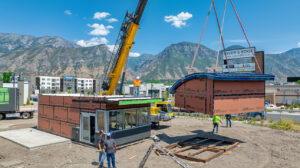
7 Brew drive-thru beverage stands throughout Utah and Arizona 

7 brew Building Drop

DALLAS – Dec. 9, 2024 – Encore Restaurants, LLC today announced the launch of Encore 7 BREW, LLC, a wholly owned subsidiary of Encore Enterprises, Inc., which owns the exclusive rights to build and operate franchise locations of 7 Brew drive-thru beverage stands throughout the Salt Lake City, Utah and Phoenix, Ariz. markets. In Utah, the new 7 Brew modular construction stands will create more than 3,000 jobs, of which approximately 60% will be full-time positions. In Arizona, the new 7 Brew franchise locations will create more than 4,700 jobs, of which approximately 60% will be full-time positions. To date, two Encore 7 BREW stands have been installed in Utah at 2298 N. University Parkway in Provo and 877 E. 4500 South in Millcreek.

“Encore 7 BREW is a highly skilled, experienced franchisee with a proven track record of building and operating storefronts that outperform the competition; we’ve strategically selected them to helm 7 Brew’s expansion into Utah and Arizona” said John Davidson, CEO of 7 Brew. “7 Brew is on a strong growth trajectory, and we have every confidence entrusting Encore 7 BREW ’s seasoned leadership to advance our mission of redefining the drive-thru beverage experience through personalized, human-centric customer service, premium products and exceptional efficiency.”

Recognized as QSR Magazine’s “Breakout Brand of 2023,” no restaurant chain in America is growing faster than 7 Brew[1], which started in Rogers, Ark. in 2017. Today, the brand has more than 295 locations operating across 31 states serving over 20,000 different combinations of custom drinks, while ‘cultivating kindness and joy with every drink.’ In February 2024, Blackstone announced[2] a growth equity investment in 7 Brew to help enable the next-generation drive-thru beverage business to accelerate its already-rapid expansion across the U.S., in collaboration with its premier franchise partners.

“Demand for drive-thru coffee and energy drinks has surged an astounding 5380% in five years, and 7 Brew is a dominant force of momentum in the category,” said Dale Doerhoff, president of Encore Restaurants. “Encore 7 BREW is uniquely positioned to drive the brand’s Utah and Arizona expansion, applying our experience as the largest, most successful Five Guys franchisee in the country from 2014-2022. Our stores consistently ranked at the top for guest satisfaction, food safety, employee retention and financial performance, ultimately attracting the parent company to buy back all 110 locations.”

Coffee is the second-largest sector in the U.S. restaurant industry, with an annual spend of over $31 billion. The U.S. coffee market is projected to grow at a CAGR of 5.1% leading up to the next decade. By 2025, 89% and 21% of U.S. coffee sales and coffee consumption, respectively, are expected to take place outside of the home, with consumers preferring drive-thru establishments. The Specialty Coffee Association reports that curbside and pick-up orders have grown by a staggering 5380% since 2019, with drive-through and app sales increasing by 30% since the pandemic alone[3].

About Encore Restaurants, LLC

Established in 2014, Encore Restaurants, LLC, a wholly owned subsidiary of Encore Enterprises, Inc., develops, owns and manages specific territories of various full dining, fast casual and quick-serve concepts across the United States. Between 2014 and 2022, Encore Restaurants acquired, developed and operated 110 locations of the “Five Guys” franchise in Texas, Oklahoma, Colorado, Massachusetts and California, becoming the largest Five Guys franchisee in the country. The portfolio was sold to the franchisor in 2022. For more information, visit https://encorebz.wp.brainvire.dev/.

About 7 Brew
7 Brew is a rapidly growing coffee brand that is revolutionizing how customers experience drive-thru coffee service and think about their morning energy boost. 7 Brew serves espresso-based coffee, chillers, teas, infused energy, sodas and more, all with an extra boost of kindness from their team. The dream of 7 Brew came alive with the first “stand” in Rogers, Arkansas and its seven original coffees. Now, more than 295 7 Brew stands operate across the country. For more information, visit www.7brew.com and follow 7 Brew on Instagram (@7brewcoffee), TikTok (@7brewcoffee), Facebook (facebook.com/7brewcoffee) and Twitter (@7BrewCoffee).

[1] Klein, D. (2024, May 21). No restaurant chain in America is growing faster than 7 BREW. QSR Magazine. https://www.qsrmagazine.com/story/no-restaurant-chain-in-america-is-growing-faster-than-7-brew/; Datassential. (2024). 2024 Top 500 Restaurant Chain Report. Retrieved from https://datassential.com/resource/2024-top-500-restaurant-chain-report/

[2] https://www.blackstone.com/news/press/blackstone-announces-growth-investment-in-7-brew/

[3] https://sca.coffee/

Encore Restaurants Opens Second 7 Brew Stand in Millcreek, UT

7 Brew Coffee Opens in Millcreek, Donates $2,000 to Primary Children’s Hospital

Drive-thru coffee concept opens second Utah location at 877 E. 4500 S.

Millcreek, UT – November 27, 2024 – 7 Brew, the drive-thru coffee concept revolutionizing the service industry, held a ribbon-cutting ceremony today, celebrating the brand’s second Utah location at 877 E 4500 S. As a dedicated community advocate, 7 Brew Millcreek made a $2,000 donation to Primary Children’s Hospital, a member of the Children’s Miracle Network.

As part of its growing presence in the state, 7 Brew also announced the opening of its third Utah location in Riverton early next year. The Encore 7 Brew franchise group plans to open 11 locations in Utah by the end of 2025.

“We can’t wait to cultivate kindness in our Millcreek community as we grow our presence in Utah after opening our first stand in the state in Provo earlier this fall, ”said Aaron Hall, director of operations, Encore 7 Brew. “7 Brew has an established partnership with Children’s Miracle Network, and we’re thrilled to build on that partnership by donating to Primary Children’s Hospital to celebrate our Millcreek opening!”

Earlier this year, 7 Brew announced an ongoing partnership with Children’s Miracle Network Hospitals to celebrate the first official 7 Brew Day. To build on the partnership, Encore 7 Brew selected Primary Children’s Hospital as a charitable partner to celebrate the opening of their first location in Provo and second location in Millcreek.

Primary Children’s Hospital members attended the ribbon-cutting to receive 7 Brew’s donation and share about the hospital’s mission of providing personalized, evidence-based medical care to the families of Utah.

7 Brew’s next step is to host a Swag Day on Saturday, Nov. 23, from 5:30 a.m. to 11 p.m., during which customers who purchase a large drink will get a free 7 Brew t-shirt.

More than your standard coffee stand, 7 Brew offers over 20,000 unique drink combinations. From the original Blondie, a caramel and vanilla breve, to 7 Energy, smoothies, shakes and teas, there is something for everyone at 7 Brew. The brand boasts more than 250 stands across the country.

The 7 Brew stand will add 50 jobs to the Millcreek area. Those interested in joining the 7 Brew Millcreek team should apply at encore.7brewcareers.com.

About 7 Brew

7 Brew is a rapidly growing coffee brand revolutionizing how customers experience drive-thru coffee service and think about their morning energy boost. 7 Brew serves espresso-based coffee, chillers, teas, 7 Energy, sodas, and more, all with an extra boost of kindness from their team. The dream of 7 Brew came alive with the first “stand” in Rogers, Ark., and its seven original coffees. Now, 7 Brew boasts more than 250 stands across the country. For more information, visit www.7brew.com and follow 7 Brew on Instagram (@7brewcoffee), TikTok (@7brewcoffee), Facebook (facebook.com/7brewcoffee) and Twitter (@7BrewCoffee).

About Encore Restaurants, LLC

Encore Restaurants, LLC. develops, owns and manages specific territories of various full dining, fast casual, and quick-serve concepts across the United States. For more information about Encore Restaurants, LLC., visit encorebz.wp.brainvire.dev, or call (214) 259-7000.

Load More