
Narrowly missing their midnight deadline, the Congress averted the impending “fiscal cliff” through passage of the American Taxpayer Relief Act of 2012 with a vote of 89-8 in the Senate, and 257-167 in the House. The president then signed the bill into law on January 2, 2013. Now that the fiscal cliff crisis has been averted, it is essential to review the changes that are to come with the passage of the American Taxpayer Relief Act, as well as the new provisions of the Patient Protection and Affordable Care Act, henceforth referred to as Obamacare, that will take effect January 1st 2013.
American Taxpayer Relief Act of 2012
Marginal Rates
Effective January 1st 2013, the American Taxpayer Relief Act modifies the Bush era tax cuts by implementing sunsets for individuals with incomes above $400,000 for single individuals and $450,000 for families. Individuals earning above the $400,000 mark will see a tax increase of 4.6%, from the previous 35%. For all other individuals in lower tax brackets, marginal rates will stay the same as they were during the Bush era tax cuts.
Capital Gains and Dividends
For capital gains and dividends, the same threshold as described above will be used. The rate for individuals earning over $400,000 will increase to 20% – a 5% increase from the year prior. All other tax brackets will remain at 15%. Joint filers earning below $72,500 and single filers earning less than $36,250 will be taxed at 0%.
Estate Taxes
Both estate and gift taxes have raised to 40% with the exemption being set at $5 million adjusted for inflation. This is a 5% increase from prior years.
Alternative Minimum Tax
Changes to the Alternative Minimum Tax (AMT) include increases to exemption amounts, an allowance of nonrefundable personal credits to the full amount of the person’s regular tax and AMT, and a yearly adjustment for inflation.
Personal Exemption Phase-Outs and Pease
Personal Exemption Phase-Outs, which were suspended under the Bush tax cuts, have been revived albeit at higher levels than in the past. Pease has also been reinstated also with a higher applicable threshold. All dollar amount thresholds required for both PEP and Pease will now be adjusted for tax years following 2013.
Education
One of the Obama Administration’s centerpieces, the American Opportunity Tax Credit (AOTC) has been extended to 2017. The credit provides up to a $2,500 tuition reimbursement for qualifying students. The credit was also modified so that students would be eligible for the credit for a total of four years, as opposed to the prior instated two year maximum. Mutually exclusive with the AOTC, the act extends above-the-line deductions for qualified tuition and related educational expenses.
Mortgage Debt Relief
To give homeowners struggling to make payments relief, the Mortgage Debt Relief Act of 2007 was extended so that homeowners may exclude canceled debt from being taxed on their principal residence up to $2 million.
Business Extenders
A variety of business extenders were included in the Taxpayer Relief Act including extension of the Work Opportunity Tax Credit (WOTC). The WOTC provides a credit for businesses that employ individuals who may be considered targeted groups as per the Federal Government. Such businesses will be provided a credit of up to 40% of the individual’s yearly wages for a maximum of $6,000. To the surprise of many, the research tax credit was also extended with bi-partisan support. Criticized for its annual $1.43 billion cost, the act rewards businesses that choose to invest in qualified research opportunities.
Part two of this segment, which is to be released in the following days, will include a review of the new Obamcare taxes that are to be implemented starting January 1st 2013. You will be able to access the new post here.
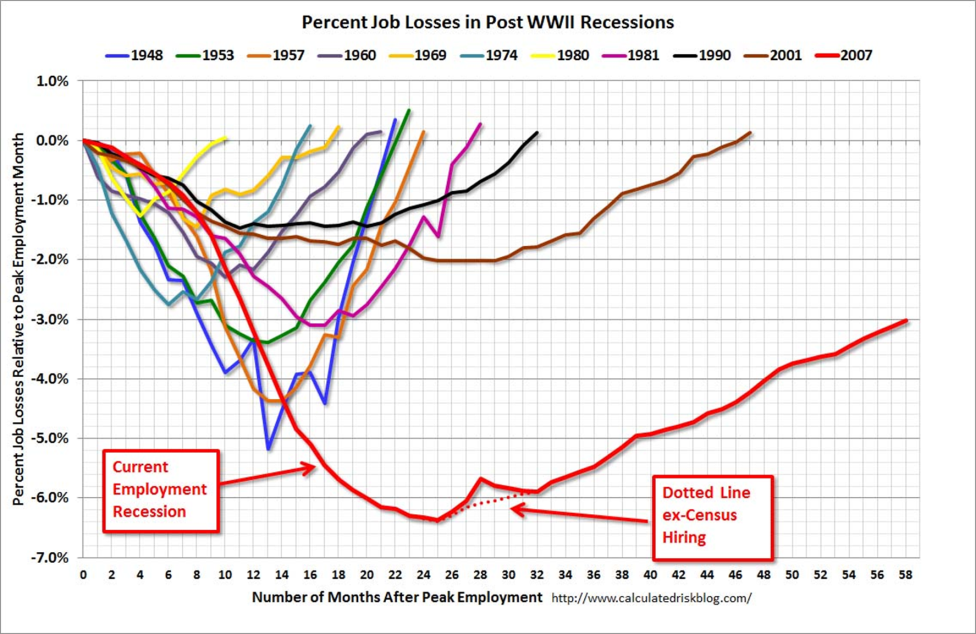 According to the U.S. Bureau of Labor Statistics, October 2012 saw 5 million workers be unemployed for 26 weeks or more. Though this is generally trending downwards, the number of unemployed people remains very high. As an integral component to consumer confidence, unemployment rates must be reduced in a drastic manner to boost confidence. (This discussion on unemployment is by no means exhaustive, and will be analyzed in greater detail in the following blog post.)
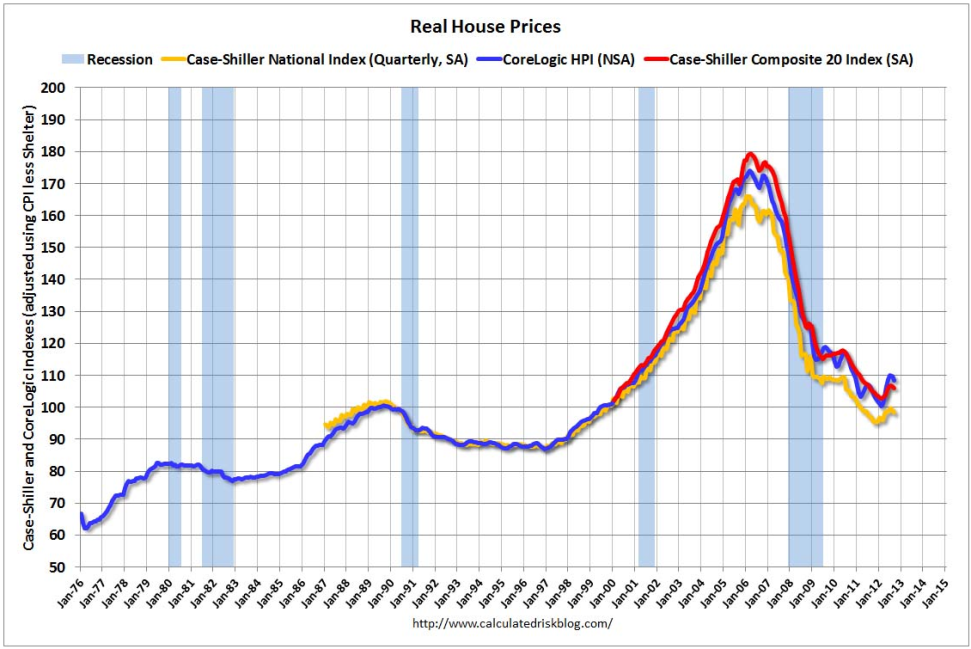 U.S. home prices, another substantial piece of the consumer confidence puzzle, tell a similar story. Currently, U.S. home prices are 30.9% below their peak 2007 values and, adjusting for inflation, home values have reverted back to the levels of 1999-2001. While this too may seem as a relatively bleak depiction of the housing market, it is important to remember that these indicators are trending in a positive direction in light of the damage done by the great recession.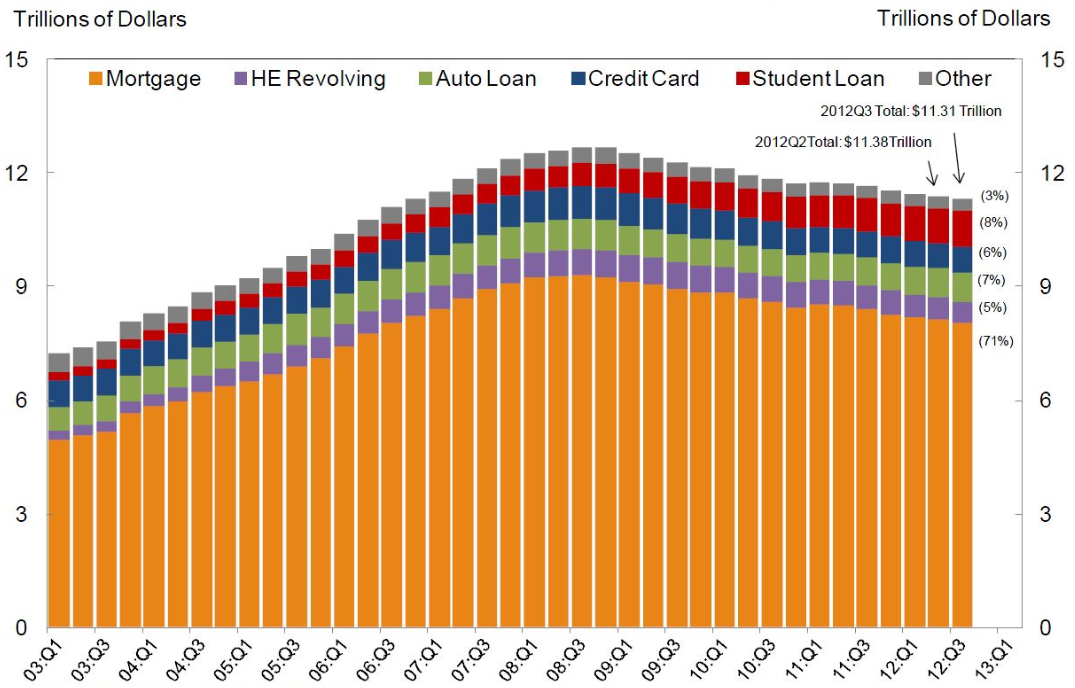
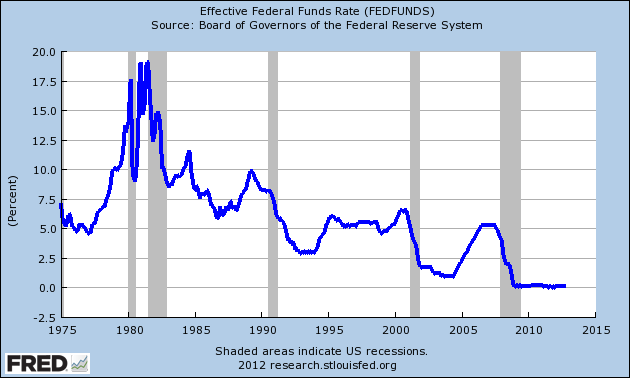 The U.S. Federal Reserve monetary policy has also had a significant impact upon total economic output. While the Federal Reserve does hold the tools to manipulate the U.S. economy the fastest and in the most direct manner, their ultimate goal remains to provide economic stimulus but not so much that high inflation becomes a problem. Due to the monetary policy, inflation is currently running near its 2% target growth. The Federal Reserve both has indicated that they intend to keep the target range for the federal funds rate, the interest rate at which banks lend their excess balances to other banks overnight, at 0 to 0.25% through at least mid-2015. It is important to note that this has been set to historically low rate to spur economic growth, and will likely never remain at such a level. While commercial banks do continue to deal with problem loans, the overall commercial lending to fuel business growth continues to trend upward.